Thursday, December 12, 2019

Blog Post #4: Effects of Video Games on Children/People


By Rory C.

        To this day video games have become a common concern among parents. Many parents have started to become worried about how video games are impacting their children and if there's a notable effect on them in the future. Well, I'm here to say that I've grown up with video games my whole life and I ended up perfectly fine like many others. This, of course, being a reasonable dose of playing time rather than excessive use in some children. 
        An issue of common apprehension among parents is related to action video games. Many parents believe that playing these games will result in their child becoming angrier and more aggressive. Several studies throughout the years state this, however, they lack insufficient evidence. " A study from the University of York and another by the Royal Society found no evidence to support the theory that video games make players more violent, and another study suggests that there is no increase in the level of aggression of players who had long-term exposure to violent video games." (Tumbokon) Many parents also think that since their children are playing these action video games they'll more likely end up committing a crime in the future.        
Photo By Jennie Book

        Another study by The American Psychological Association also found very little evidence to support connecting video game violence to real-life criminal violence. (Tumbokon) Although this is a contradiction I still believe that violence could be influenced by these games but it's very uncommon. I certainly haven't been influenced negatively by these types of games, in fact, I have actually found them very beneficial. 
           Many video game players like me benefit greatly by playing games on a day to day basis. Surprising as it may sound, video games can help improve and train your vision. In the TED Talk, I watched it stated that gamers have an easier time to read the fine print on an item such as a prescription bottle. They can also identify different shades of grey that non-video game players couldn't see as easily or at all. Not only that but these types of action/violent video games can "help improve our ability to track objects in the real world." (Bavelier) Say if I was driving in a car, my sense of the road and ability to know where all the cars are would be significantly better than a nongamer that doesn't possess those skills. "Action video games have a number of ingredients that are actually really powerful for the brain like plasticity, learning, attention, and visual." (Bavelier) I believe these qualities given from playing action games could ultimately help many people including children in school. Especially children that are struggling a lot in school could benefit from this. 

Photo By Courtney Columbus

        A lot of real-world skills are also taught through video games. Through my personal experience of playing games, I've noticed that I've excelled in a couple of different real-world skills. Some of the skills that I've acquired from playing games are perseverance, quick thinking, and the ability to know what to do when a challenge in life is thrown at me.
        Personally, I believe that children should be able to play these kinds of games but only if their playing time is in reasonable portions. The child should also be of appropriate age, no young children should be allowed to take part in playing these games. What do you think? Do you think parents should let their children enjoy and benefit from these games?
     
Comment below what your opinion is on this matter... and take the survey I made


Bavelier, D. (2012, November 19). Your brain on video games. Retrieved December
     11, 2019, from TED Talks website: https://www.ted.com/talks/
     daphne_bavelier_your_brain_on_video_games?language=en


Book, J. (2019, April 2). Kid playing PS4 [Image]. Retrieved from
     https://www.dailymail.co.uk/sciencetech/article-6877611/
     Doctors-warn-Fortnite-caused-children-smash-cars-stop-eating.html


Columbus, C. (2017, August 9). Action video games may affect the brain
     differently, depending on what you play. Retrieved December 11, 2019, from
     NPR website: https://www.npr.org/sections/health-shots/2017/08/09/542215646/
     video-games-may-affect-the-brain-differently-depending-on-what-you-play


Tumbokon, R. (2019, August 11). 25+ positive and negative effects of video
     games. Retrieved December 11, 2019, from Raise Smart Kid website:
     https://www.raisesmartkid.com/3-to-6-years-old/4-articles/
     34-the-good-and-bad-effects-of-video-games


Monday, December 9, 2019

Blog #3: Distracted Driving/Hands Free Law


Local

        Each year a huge number of people die due to phone-related car accidents. Roughly 4,000-5,000 (Djurkovic) people die per year in the US and I believe that this number can be heavily reduced if a hands-free law is enforced in every state. Not only should this law be in the United States, I think it should be implemented on a more global scale. Such as countries in Europe or other regions like the Middle East. 
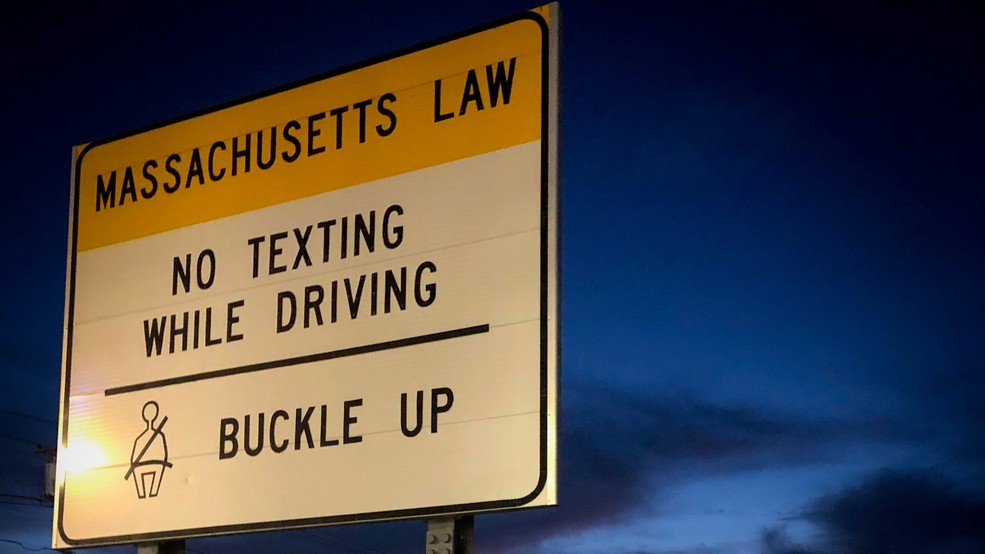
        To take things back to a more local scale, recently a law banning cellphones while driving in the state of Massachusetts has been passed. (Reiss) The only exception of cell phone use by utilizing a hands-free Bluetooth or wireless device. However, you have to have the hand's free device set up ahead of the time. With the law, drivers cannot read text messages or view images or videos. The only exception I'm assuming is if the driver is looking at some sort of navigation. But the mobile device would have to be mounted on a safe location such as the windshield. The only questions I have are what happens when an emergency or urgent situation takes place? What if someone has a medical issue? And how does this law apply to motorcyclists?
        I'm very glad that this law was passed and I think it should be applied to all 50 states. I completely agree with this new law and I believe it's going to lessen the total number of fatal crashes and ultimately make the roads a safer place.

Image result for hands free law mass free images"
Image By Salsberg
 

Global 

       Many countries today are very strict when it comes to texting and driving. Some countries haven't established laws like the U.S. States but, yet they fine the driver money if caught in action. These fine's aren't small either, they're substantially large. "In Oman, drivers caught using a handheld device can face up to 10 days in jail. They also face a maximum fine of 300 OMR, about $780." (Wallace) Those are some of the biggest consequences out of many countries to this day. I think that many people would most definitely follow these rules, especially because of jail time. I think more substantial consequences like this results in the driver to obey the law more often. 
        Omar isn't the only country with heavy fines like such. "Other countries with relatively high fines for first-time offenses include Bermuda ($500), Trinidad and Tobago (about $225), Qatar (about $137) and the Philippines ($100)." (Wallace) I believe that the higher the fine is, the more likely the driver will not use their cellphone while driving. This helps the ultimate goal of decreasing the number of fatal car accidents that result in deadly injuries and death. 


Mobile Phones and Driving Safety

        In the CNN article, Maureen Vogel, spokeswoman for the National Safety Council said: " Every time you see somebody using a telephone behind the wheel whether that's texting or talking, you need to be able to pull them over right away and ticket them for it." (Wallace) I completely agree with what Maureen Vogel stated. No matter what, if an officer on duty sees a driver operating a cell phone they should be instantly pulled over. No excuses can be made especially because people's lives are in danger if the driver is distracted. I believe just what Maureen said, the officer should not just let the driver off with a warning, they should get ticketed. This being said, if the driver does get ticketed, they will learn from their mistakes and they'll most likely never drive using their phone again. 


Works Cited


Djurkovic, Nikola. "24 Shocking Texting and Driving Statistics ." Carsurance, 10
     Nov. 2019, carsurance.net/blog/texting-and-driving-statistics/. Accessed 6
     Dec. 2019.


"Mobile Phones and Driving Safety." Wikipedia, Wikimedia Foundation Inc., 8 Dec.
     2019, en.wikipedia.org/wiki/Mobile_phones_and_driving_safety. Accessed 9
     Dec. 2019.


Reiss, Jaclyn. "How the New Law Banning Cellphone Use While Driving in
     Massachusetts Affects You." Boston Globe [Boston], 27 Nov. 2019. Boston
     Globe, www.bostonglobe.com/metro/2019/11/25/
     how-new-law-banning-cell-phone-use-while-driving-affects-you/
     YnzoxBQ1FK0XZmMrd3FkwJ/story.html. Accessed 6 Dec. 2019.


Salsberg, Bob. "Mass House Passes Hands-Free Driving, Racial Profiling Bill."
     10 Turn to 10, 16 May 2019, turnto10.com/politics/
     mass-house-passes-hands-free-driving-racial-profiling-bill. Accessed 9 Dec.
     2019.


Wallace, Kelly. "Driving While Distracted: Which Countries Have Toughest Laws?"
     CNN Health, Cable News Network, 3 Apr. 2017, www.cnn.com/2017/03/24/
     health/distracted-driving-laws-global-countries/index.html. Accessed 9 Dec.
     2019.


Monday, November 25, 2019

Blog #2: Why Should You Quit Social Media


        After listening to all the TED Talks I decided to direct my blog on the second video which was called, Why Should You Quit Social Media. The speaker Cal Newport formulates his talk by introducing people's concerns about not using social media. He counter argues the points being addressed and tells the audience his opinion and solution. 
      A lot of the arguments he brings up in his talk are agreeable but some, however, are not. "Cal, social media is one of the fundamental technologies of the 21st century. To reject social media would be an act of extreme of Luddism. It would be like riding to work on a horse or using a rotary phone."
(Why You Should Quit Social Media)
        I agree with Cal on this one when he says to the crowd "this is nonsense" Social media isn't a considered fundamental technology to me, more so a form of entertainment and a way to communicate with friends and family. When I hear the words fundamental technology I think of something such as AI or computer advancements rather than social media. Also, the fact that the person compared not using social media to riding to work on a horse is ridiculous. That's completely a faulty comparison especially because the two have no relation whatsoever.
Image by Vesalainen

        "Cal, I can't quit social media because it is vital to my success in the 21st century. If I do not have a well-cultivated social media brand, people won't know who I am, people won't be able to find me, opportunities won't come my way, and I will effectively disappear from the economy."
(Why You Should Quit Social Media)
        See, this is one of the few guest objections in the TED Talk that I agree with. I believe today in the 21st-century social media plays such an important role in businesses. Social media could help promote a product to the public and many people would be able to see that because of how popular social media truly is. Not only in businesses but I would say social media could help bring individual success. If someone starts a business or service social media would be able to bring exposure and help grow the person's business or service.
   Wordcloud, Tagcloud, Cloud, Text, Tag, Internet, Web
Image By Narciso

     Many people these days including me haven't considered the harms of social media. "Along with the ubiquitous smartphone use and social media use on the campus, came an explosion of anxiety-related disorders on those campuses." (Why You Should Quit Social Media) This is crazy to think about, how social media was created for entertainment and after all, it harms us by causing anxiety and depression in people. I would have never thought social media would do such a thing to people in society. Not only that but bullying on social media platforms occur frequently which could also be considered another major harm. 
        I personally don't think I would be able to stop using social media entirely because it already plays a role in my life and I've been using it for quite some time now. I've grown up in a generation where social media is a huge part of many people's lives and I don't think many people would be able to make that change away from social media. What about you? Comment below what you think and take the survey I made...


Narciso. WordCloud . 19 Mar. 2015. Pixabay Images, 19 Mar. 2015, pixabay.com/
     illustrations/wordcloud-tagcloud-cloud-text-tag-679950/. Accessed 25 Nov.
     2019.

Vesalainen, Tero. "Smartphone Screen-Social Media." 5 Mar. 2017. Pixabay,
     pixabay.com/photos/smartphone-screen-social-media-2123520/. Accessed 24
     Nov. 2019.

Why You Should Quit Social Media. Performance by Cal Newport, TED Talks, 2016.
     TED Talk, www.ted.com/talks/
     cal_newport_why_you_should_quit_social_media. Accessed 24 Nov. 2019.

Friday, November 15, 2019

Blog #1: Top 6 Fears About Future Technology


For my first blog post, I'm going to be reflecting on the article called ¨Top 6 Fears About Future Technology¨ by Kevin Dickinson. 
         Many of the central ideas written about in the article were unreasonable such as killer robots or vicious virtual reality. That's why for this blog, I wanted to go in-depth about one section of the article that I found most reasonable and interesting. 
         The section of the article that I found most reasonable was Runaway automation. To briefly summarize the section, it addressed how soon robots could take many jobs from humans. The ultimate result of this would be that millions of workers would get replaced, leaving people unemployed. 

Image By Taylor 

         Today, technology/robotic machines have taken jobs from humans in many work fields, however, in the near future, this will more of a notable issue. ¨A McKinsey Global Institute study suggests that nearly 70 million people could lose their jobs to automation by 2030.¨ (Kevin Dickinson) To me and my generation, this statistic is very frightening because 2030 will be when we´re all grown up adults looking for employment. However, this is not as much of a fearful statistic for a generation of people like my dad because they´ll be retired. 
         Some work fields in which jobs could be taken by robots are the taxi industry and assembly-line jobs. Self-driving cars such as Tesla ¨could soon displace 5 million workers nationwide.¨ For people working in the taxi or Uber industry, this is a major threat to their job. ¨A Pew Research report found that 72 percent of US adults surveyed expressed worry over automation, compared with 33 percent who were enthusiastic.¨ (Kevin Dickinson) This shows that many people including me are highly concerned about the future of jobs and how robots are slowly taking jobs away from many fields. 


Dickinson, Kevin. "Top 6 fears about future technology." Big Think, 18 Sept.
     2018, bigthink.com/technology-innovation/
     fear-future-technology?rebelltitem=3#rebelltitem3. Accessed 15 Nov. 2019.


Taylor, Chloe. "Robots Could Take over 20 Million Jobs by 2030, Study Claims."
     CNBC, 26 June 2019, pp. 1-3. CNBC, www.cnbc.com/2019/06/26/
     robots-could-take-over-20-million-jobs-by-2030-study-claims.html. Accessed
     15 Nov. 2019.