Local
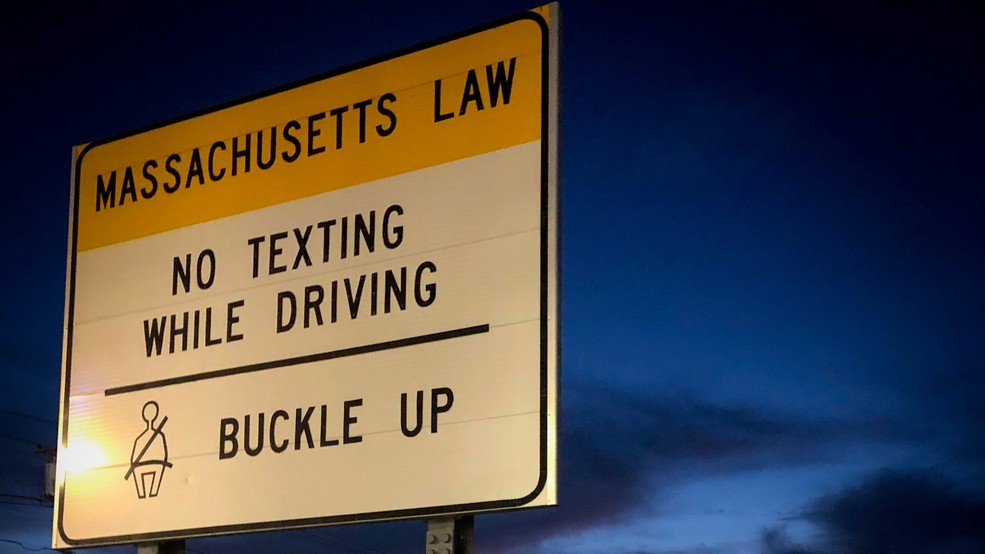
To take things back to a more local scale, recently a law banning cellphones while driving in the state of Massachusetts has been passed. (Reiss) The only exception of cell phone use by utilizing a hands-free Bluetooth or wireless device. However, you have to have the hand's free device set up ahead of the time. With the law, drivers cannot read text messages or view images or videos. The only exception I'm assuming is if the driver is looking at some sort of navigation. But the mobile device would have to be mounted on a safe location such as the windshield. The only questions I have are what happens when an emergency or urgent situation takes place? What if someone has a medical issue? And how does this law apply to motorcyclists?
I'm very glad that this law was passed and I think it should be applied to all 50 states. I completely agree with this new law and I believe it's going to lessen the total number of fatal crashes and ultimately make the roads a safer place.
 |
| Image By Salsberg |
Global
Many countries today are very strict when it comes to texting and driving. Some countries haven't established laws like the U.S. States but, yet they fine the driver money if caught in action. These fine's aren't small either, they're substantially large. "In Oman, drivers caught using a handheld device can face up to 10 days in jail. They also face a maximum fine of 300 OMR, about $780." (Wallace) Those are some of the biggest consequences out of many countries to this day. I think that many people would most definitely follow these rules, especially because of jail time. I think more substantial consequences like this results in the driver to obey the law more often. Omar isn't the only country with heavy fines like such. "Other countries with relatively high fines for first-time offenses include Bermuda ($500), Trinidad and Tobago (about $225), Qatar (about $137) and the Philippines ($100)." (Wallace) I believe that the higher the fine is, the more likely the driver will not use their cellphone while driving. This helps the ultimate goal of decreasing the number of fatal car accidents that result in deadly injuries and death.
 |
| Mobile Phones and Driving Safety |
Works Cited
Nov. 2019, carsurance.net/blog/texting-and-driving-statistics/. Accessed 6
Dec. 2019.
"Mobile Phones and Driving Safety." Wikipedia, Wikimedia Foundation Inc., 8 Dec.
2019, en.wikipedia.org/wiki/Mobile_phones_and_driving_safety. Accessed 9
Dec. 2019.
Reiss, Jaclyn. "How the New Law Banning Cellphone Use While Driving in
Massachusetts Affects You." Boston Globe [Boston], 27 Nov. 2019. Boston
Globe, www.bostonglobe.com/metro/2019/11/25/
how-new-law-banning-cell-phone-use-while-driving-affects-you/
YnzoxBQ1FK0XZmMrd3FkwJ/story.html. Accessed 6 Dec. 2019.
Salsberg, Bob. "Mass House Passes Hands-Free Driving, Racial Profiling Bill."
10 Turn to 10, 16 May 2019, turnto10.com/politics/
mass-house-passes-hands-free-driving-racial-profiling-bill. Accessed 9 Dec.
2019.
Wallace, Kelly. "Driving While Distracted: Which Countries Have Toughest Laws?"
CNN Health, Cable News Network, 3 Apr. 2017, www.cnn.com/2017/03/24/
health/distracted-driving-laws-global-countries/index.html. Accessed 9 Dec.
2019.

This is a super interesting topic! I definitely fall victim to looking at my phone to either change music or answer a phone call while driving but after reading this I have changed my mind about doing those things in the future. I hope people realize how many people are dying due to texting and driving.
ReplyDeleteRory, you mention fines and jail times in the global context. Are fines and jail times the consequence in Massachusetts? What about in New Hampshire?
ReplyDeleteYes, there are most definitely fines in Massachusetts and New Hampshire. The fine in Mass is $100 for the first offense, $250 for the second offense, and $500 for the third offense. I'm assuming the fines are fairly similar in New Hampshire. Although, I don't think jail time is given for the two states for texting and driving. Jail time tends to be more of a punishment in foreign countries.
DeleteThis is a fantastic blog as it brings a great issue to the table for us to see!
ReplyDeleteI like how you start your blog out with an interesting fact that really hones the reader in. This is a serious topic, that does occur more often than not as a lot of teens do text and drive etc etc. It's a scary thing to think about but it does happen.
ReplyDelete